By Bethany Pickett Shah and Ivan De Leon
The wait is over. The Texas Supreme Court recently finalized amendments to Texas Rule of Civil Procedure 201, implementing the Uniform Interstate Depositions and Discovery Act (“UIDDA”).[1] The amendments took effect August 31, 2025, marking a shift in how parties conduct interstate discovery involving Texas witnesses.
By adopting the UIDDA, Texas has joined the overwhelming majority of states in streamlining interstate discovery. Massachusetts, Missouri, and New Hampshire remain the only states that have yet to adopt some version of the UIDDA, leaving them as outliers in an otherwise uniform national system.
What Changed
For decades, attorneys seeking evidence in Texas for an out-of-state proceeding were first required to obtain a “mandate, writ, or commission” from the court where the lawsuit was pending. This process was cumbersome because it involved unnecessary delays and expenses.
Now, under Rule 201.3, a party simply submits an out-of-state subpoena to a court clerk in the Texas county where discovery is sought. The clerk must then promptly issue an equivalent Texas subpoena incorporating the same terms—with no judicial stamp of approval required.
The new rule applies to subpoenas requiring witnesses to:
- Attend and give testimony at depositions (oral examination or written questions); or
- Produce documents or tangible things.
Importantly, this request does not constitute an appearance in Texas courts, which means out-of-state attorneys can obtain subpoenas without needing to be licensed in Texas, seek pro hac vice admission, or hire local counsel to issue and serve the subpoena.
Once issued, the Texas subpoena must be served according to Texas Rules of Civil Procedure 176 and 205. From there, Texas law controls. Any discovery disputes, whether concerning protective orders or enforcement, get resolved in Texas courts.
One Key Limitation: Property Inspections
Texas’s version of the UIDDA, however, includes a notable exception that prevents clerks from issuing subpoenas for premises inspections. Litigants will still need a court order for subpoenas seeking inspection of property. Rule 201.3 covers testimony and documents, while carving out and preserving Texas’s traditional requirement for judicial oversight of property inspections.
Why This Matters
The new rule simplifies interstate discovery by eliminating jurisdictional hurdles, reducing costs, and accelerating the discovery process. By directing clerks to act “promptly” and without the need for judicial intervention, the UIDDA framework removes delays that previously plagued litigation across state lines. This change benefits both out-of-state parties seeking discovery in Texas and Texas litigants conducting discovery in other UIDDA states that require reciprocity.
Companies with employees, documents, or operations in Texas can expect to see an increase in out-of-state discovery requests, as the process is now more efficient for parties in litigation elsewhere to obtain testimony and documents from Texas witnesses. Businesses should review their document retention policies and ensure employees understand their potential obligations when served with out-of-state subpoenas.
[1] On June 11, 2023, the Texas Legislature passed H.B. 3929, directing the Texas Supreme Court to consider adopting the UIDDA before September 1, 2025. Tex. HB 3929, 88th Leg., R.S. (2023).
The opinions expressed are those of the authors and do not necessarily reflect the views of the firm, its clients, or any of its or their respective affiliates. This article is for informational purposes only and does not constitute legal advice. For more information, please contact a member of the Trial & Appellate Litigation practice.
 Meet Bethany
 Meet Bethany
Bethany Pickett Shah is a partner in Jackson Walker’s Houston office focusing on litigation and white collar investigations. She represents media, energy, healthcare, retail, and technology companies; has tried four federal jury trials to verdict; and argued before the U.S. Court of Appeals for the Fifth Circuit. Previously a Special Assistant U.S. Attorney in the Eastern District of Texas, White House Deputy Associate Counsel, and DOJ counsel, she worked on the confirmations of Justices Brett Kavanaugh and Amy Coney Barrett and more than 100 other federal judges, and advised on high-profile legal issues.
Meet Ivan
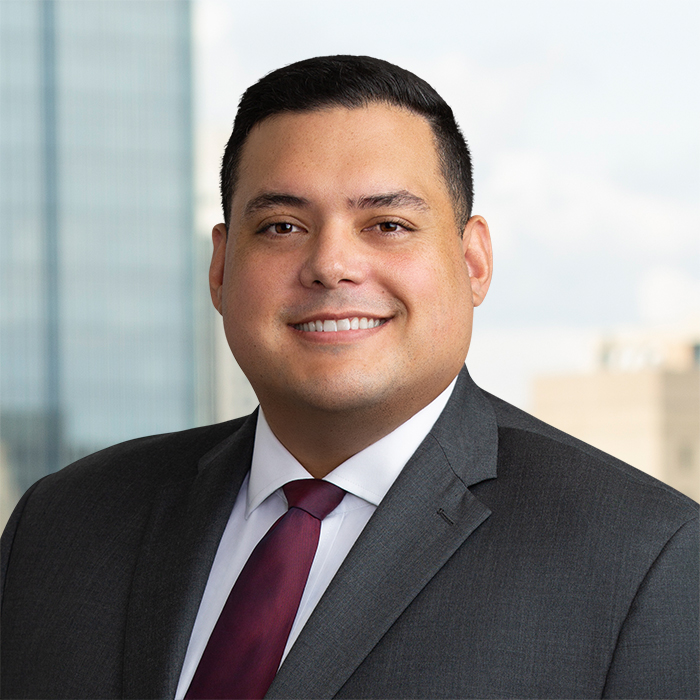 Meet Ivan
Ivan De Leon is an attorney in Jackson Walker’s Houston office, practicing in the Trial & Appellate Litigation section with experience in high-stakes personal-injury and complex commercial disputes. Before joining the firm, he practiced at a boutique Texas firm handling a diverse personal-injury docket from liability and damages evaluations to dispositive motions and trial readiness. While at South Texas College of Law, he served as Board of Advocates Co-Chair, competed in Moot Court, taught Civil Procedure, contributed to the Law Review, graduated second in his class, and twice served as a Jackson Walker summer associate.